The Handmaiden: Park Chan-wook's Dazzling Game of Deceit
Park Chan-wook’s 2016 masterpiece, The Handmaiden, isn’t merely a film; it’s a meticulously crafted labyrinth of desire, deception, and liberation. From its opening frames, it plunges the viewer into a world so sumptuously designed and morally ambiguous that one can’t help but be utterly captivated. This erotic psychological thriller, adapted from Sarah Waters’ novel Fingersmith, transplants its Victorian English setting to 1930s Japanese-occupied Korea, adding potent layers of colonial tension and cultural clash to an already intricate narrative of con artists and hidden identities. It’s a film that demands your full attention, rewarding it with twists that genuinely shock and a visual feast that lingers long after the credits roll. It’s a bold, sensual, and ultimately empowering tale that solidifies Park’s reputation as a cinematic provocateur with an unparalleled eye for beauty and brutality.
Shadows and Silk: A Con Unfurls
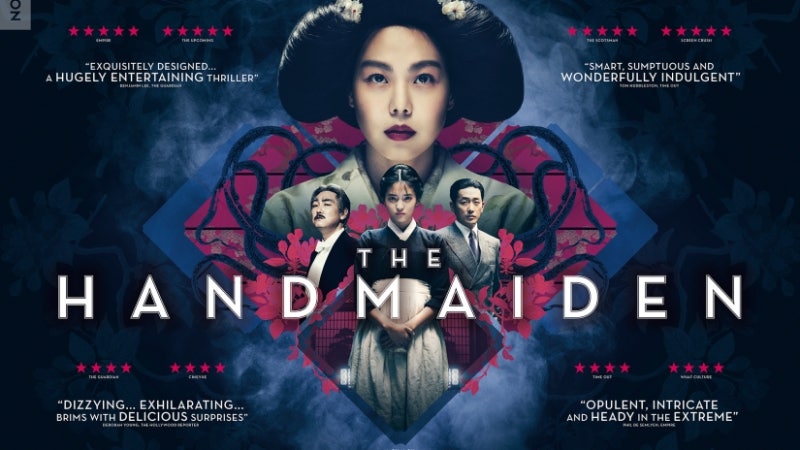
The narrative of The Handmaiden begins with a seemingly straightforward scheme. Sook-hee (Kim Tae-ri), a streetwise Korean pickpocket, is recruited by a con man masquerading as the sophisticated ‘Count Fujiwara’ (Ha Jung-woo). Their grand design: for Sook-hee to become the handmaiden to the reclusive Japanese heiress Lady Hideko (Kim Min-hee), who lives under the tyrannical thumb of her eccentric, rare-book-collecting Uncle Kouzuki (Cho Jin-woong). Sook-hee’s mission is to subtly encourage Hideko to fall for the ‘Count,’ marry him, and then, once he secures her vast inheritance, have her committed to an asylum. The initial setup paints a picture of cunning manipulation, but as Sook-hee infiltrates the opulent, isolated estate, the lines between predator and prey blur with intoxicating speed. This isn’t a simple heist; it’s a psychological chess match where every glance, every touch, and every whispered word carries a double meaning. The film’s brilliance lies in its three-part structure, each section re-framing events from a different character’s perspective, revealing layers of deceit and hidden motivations that completely upend earlier assumptions.

The Serpent’s Embrace: Performances That Seduce
The performances at the heart of The Handmaiden are nothing short of hypnotic. Kim Min-hee as Lady Hideko delivers a masterclass in fragile elegance, her initial demureness slowly peeling away to reveal a woman of formidable will and deep-seated pain. She is captivating, oscillating between vulnerability and steely resolve, often with just a subtle shift in her gaze. Kim Tae-ri, in her debut feature film role, is a revelation as Sook-hee. Her character’s journey from a rough-and-tumble thief to a woman awakening to love and agency is utterly believable and deeply moving. The chemistry between Kim Min-hee and Kim Tae-ri is electric, creating a central dynamic that is both tender and fiercely passionate. Their intimate scenes, while explicit, are integral to the film’s exploration of liberation from patriarchal oppression, even if some critics debated their portrayal. Ha Jung-woo’s Count Fujiwara is perfectly cast as the charming, yet utterly despicable, con artist, exuding a slick menace that makes his eventual comeuppance all the more satisfying. Cho Jin-woong as Uncle Kouzuki is chillingly austere, embodying a perverse intellectualism that fuels the estate’s dark secrets. The ensemble casts a long shadow, each playing their part in a meticulously choreographed dance of power.
A Canvas of Cruelty and Color
Visually, The Handmaiden is a triumph, a testament to director Park Chan-wook’s singular aesthetic and the masterful cinematography of Chung Chung-hoon. Every frame is a painting, saturated with rich colors and exquisite detail, from the sprawling, meticulously manicured Japanese gardens to the suffocating opulence of Kouzuki’s mansion, a blend of traditional Japanese and Victorian styles. The film uses its visual language to reflect the characters’ internal states and the shifting power dynamics. Close-ups are intensely personal, while wider shots often emphasize the characters’ entrapment within their gilded cage. The costume design, a symphony of silk kimonos and intricate hanboks, further enhances the visual storytelling, subtly marking shifts in identity and allegiance. The score by Jo Yeong-wook is equally evocative, weaving a tapestry of suspense, romance, and melancholic beauty that perfectly complements the on-screen drama. Critics widely lauded the film for its directing, writing, and technical achievements, and it garnered significant buzz, including a Palme d’Or nomination at the 2016 Cannes Film Festival. It also performed strongly at the box office, setting records for an R-rated film in Korea, ultimately grossing over $38 million worldwide.
The Unfurling of Truth
What truly elevates The Handmaiden beyond a mere thriller is its profound thematic depth. It is a searing critique of misogyny and patriarchal control, depicting women as objects of male fantasy and inheritance, only to then subvert these expectations with breathtaking skill. The film uses its narrative structure to empower its female protagonists, allowing them to reclaim their stories and their desires. It’s a story about the intoxicating power of forbidden love, the courage to defy societal expectations, and the ultimate triumph of solidarity between women in a world designed to keep them subservient. The twists are not just for shock value; they serve to deepen our understanding of each character’s struggle and their journey toward self-actualization. The Handmaiden doesn’t shy away from discomfort, exploring themes of abuse and fetishization, but ultimately, it champions agency and defiance.
Park Chan-wook’s The Handmaiden is not a film for the faint of heart, nor for those seeking easy answers. It is a baroque, beautiful, and sometimes brutal cinematic experience that unfolds with the precision of a master storyteller. It’s a film that challenges, provokes, and ultimately liberates, leaving an indelible mark on the viewer’s psyche. Its visual splendor, intricate plotting, and powerful performances coalesce into a work that is both a thrilling ride and a poignant meditation on freedom. Watch it for the unparalleled artistry, stay for the visceral satisfaction of its audacious narrative, and leave with a renewed appreciation for cinema’s ability to expose and dismantle oppressive structures with style and wit. This is essential viewing for anyone who appreciates film as an art form, especially those drawn to narratives that champion the defiant spirit. It’s a captivating, complex, and utterly unforgettable piece of filmmaking that deserves its place among the finest works of modern Korean cinema.